STRING 2026-2030 Strategy: Building a More Connected, Competitive and Resilient Megaregion
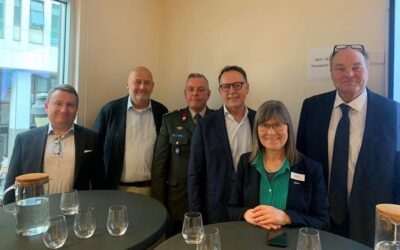
At the 3rd STRING Political Forum, recently held in Brussels STRING’s political representatives formally approved the new STRING 2026–2030 Strategy, setting a shared direction for the cooperation over the coming years.
The strategy builds on STRING’s longstanding commitment to strengthening infrastructure and cross-border connectivity along the Hamburg–Oslo corridor, while placing greater emphasis on how improved connectivity can support European competitiveness, innovation, investment and sustainable economic growth.
Against a backdrop of geopolitical uncertainty, changing economic conditions and growing demands for resilience, the strategy outlines how STRING can contribute to a more connected, competitive and sustainable Northern Europe.
Two Mutually Reinforcing Strategic Pillars
The strategy is built around two closely connected pillars:
Infrastructure & Connectivity
Infrastructure remains at the core of STRING’s cooperation. The strategy focuses on strengthening the functionality of the entire Hamburg–Oslo corridor by addressing critical transport bottlenecks, advancing strategic infrastructure investments and improving cross-border mobility, resilience and connectivity.
This includes continued political attention to major infrastructure priorities such as the Fehmarn Belt Fixed Link and its hinterland connections, the Hamburg Node, additional fixed connections across the Öresund and improved railway connectivity between Gothenburg and Oslo.
Enhancing Competitiveness
Building on stronger infrastructure and connectivity, STRING will work to enhance competitiveness by connecting businesses, research institutions, innovation ecosystems and labour markets across borders.
The ambition is to strengthen the conditions for green investment, innovation and industrial development throughout the STRING geography, while reinforcing the economic and political case for further infrastructure investments.
Stronger Cooperation and Shared Responsibility
Beyond its strategic priorities, the new strategy also places greater emphasis on how STRING works together.
It highlights the importance of political ownership, flexible cooperation and shared responsibility between STRING’s members and Secretariat. While all agreed strategic priorities remain part of a common portfolio, the intensity of cooperation may vary over time depending on political opportunities, project maturity and members’ priorities.
With the adoption of the STRING 2026–2030 Strategy, STRING establishes a common framework for strengthening connectivity, competitiveness and sustainable development across the megaregion.
Download and read the full strategy here