SEALS
Scandinavian Electrified Autonomous Logistics Scale-up
Powered by Interreg Öresund-Kattegat-Skagerrak
2030-sekretariet, Grønt Landtransportprogram,
Rådet for Grøn Omstilling & STRING Megaregion



The Highway to Zero
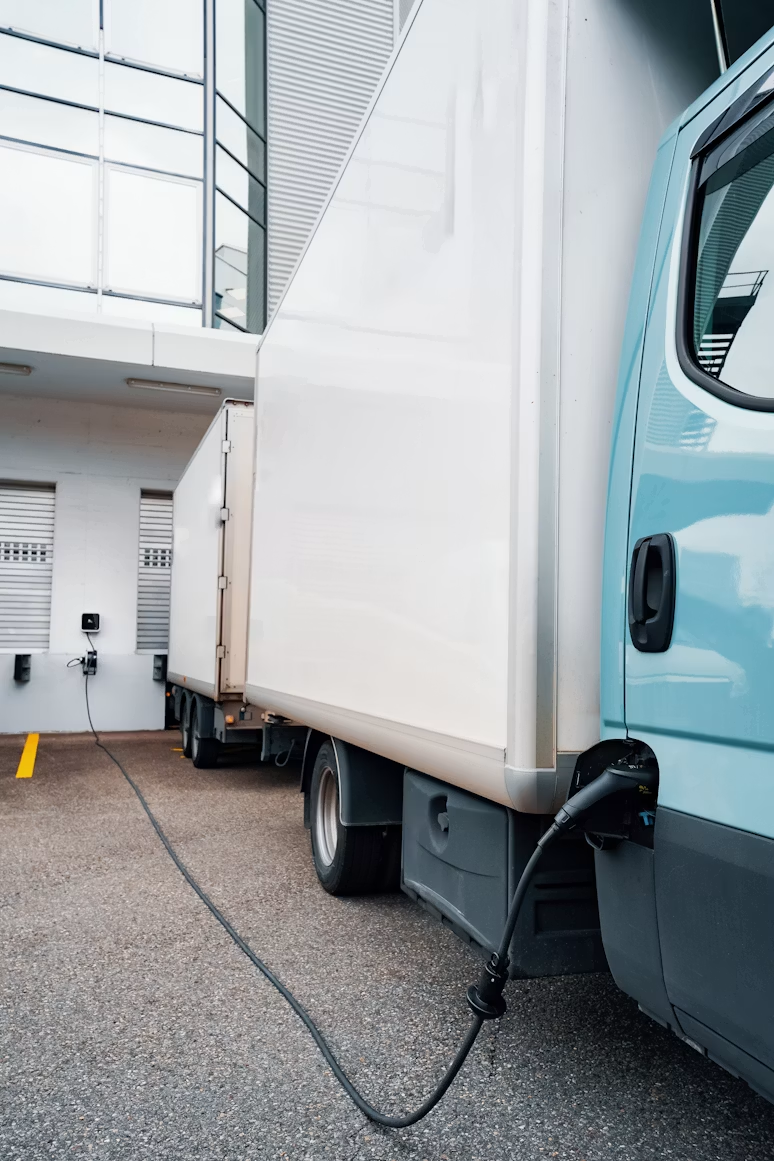
The transport sector is facing a huge transformation. The SEALS project will make Scandinavia’s most important freight corridor fossil-free by pushing the spread of electric trucks and at the same time paving the way for autonomous truck transport. It could become a model for the sustainable logistics of the future.
Although Denmark, Norway and Sweden are at the forefront when it comes to electric vehicles, heavy road transport is still a major climate challenge. Achieving national and European climate goals requires rapid and extensive electrification of trucks. But the road to get there is full of barriers: lack of charging infrastructure, high costs and uncertainty about the political framework.
Project ambition
SEALS – Scandinavian Electrified Autonomous Logistics Scale-up – will develop a roadmap for how the transport corridor Hamburg–Copenhagen–Gothenburg–Oslo–Trondheim can become completely fossil-free by 2035. The project examines what it takes to go from a small number of electric trucks today to thousands on the same route, and analyzes the possibilities for electrification in combination with autonomous (self-driving) transport.
How SEALS will solve the challenge
The project focuses on the so-called ÖKS Zero Corridor, which stretches from Hamburg via Copenhagen, Malmö, Gothenburg and Oslo to Trondheim. Here, SEALS conducts analyses, practical tests and dialogue with authorities. A unique part of the project is to combine electrification with autonomous technology – something that can spread the need for charging over time and reduce infrastructure costs.
Why does the solution work?
The ReduCT pilot project has already shown that systematic scaling up is possible if the right management tools and investments are put in place. SEALS builds on these insights and creates a common knowledge base for three countries. The project is aimed at actors from the transport sector, energy companies and authorities.
Expected results
By 2028, SEALS will deliver:
- Mapping of needs for electricity and charging infrastructure.
- Analysis of where existing infrastructure can be utilized.
- An autonomous transport corridor that makes the Nordic region a leading region.
A common roadmap – “The SEAL Deal” – to achieve full fossil-free status by 2035.
By 2035, the project will create the basis for the ÖKS corridor to become Europe’s fastest-adapted and most scalable model for fossil-free heavy road transport.
- STRING will turn insights into political action
STRING leads the project’s work on evaluation, dissemination and political anchoring, connecting the project’s analysis and practical findings with decision-makers at regional, national and European level.
Through political dialogue, conferences and stakeholder engagement, STRING works to ensure that knowledge from the Scandinavian corridor is translated into concrete policy recommendations and better conditions for cross-border electric and autonomous freight transport.